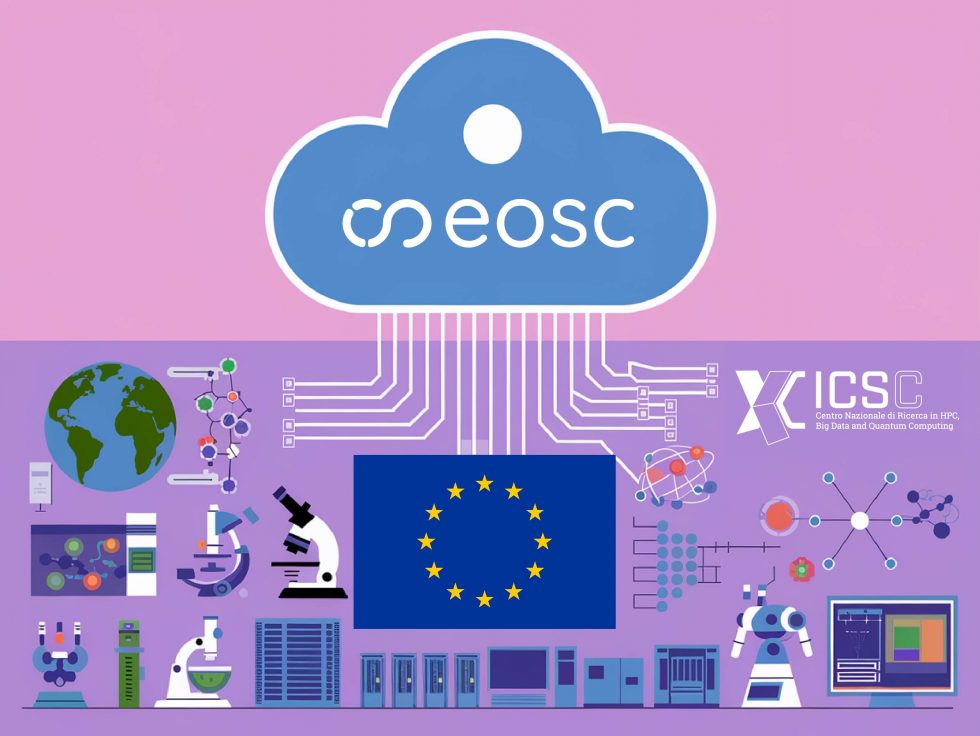
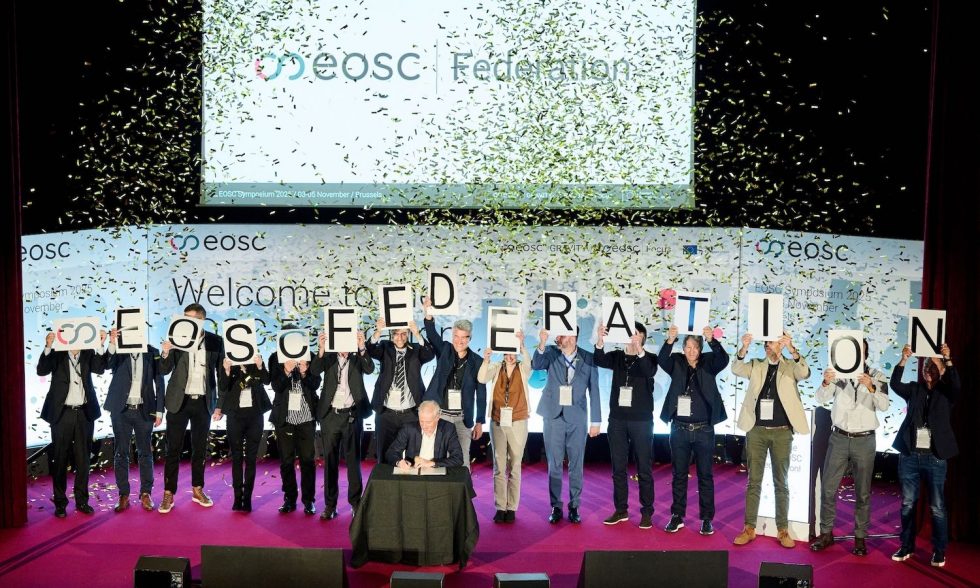
Bologna, February 20 – Today it was confirmed that ICSC – National Research Center in HPC, Big Data and Quantum Computing has been officially selected as a National Node and will play a leading role in the creation of the European Open Science Cloud (EOSC). The goal of EOSC, an initiative coordinated by the EOSC Association, together with the European Commission, EU member states, and associated countries, is to facilitate access to scientific data and promote European growth through the federation of computing resources, databases, and services for data management and analysis. The announcement comes at the end of a six-month competitive selection process involving over 100 candidate nodes represented by European institutions, in which the ICSC National Center was found to meet all the necessary requirements. This selection represents recognition of the ICSC’s strategic role in the landscape of scientific research and technological innovation in Europe.
What is EOSC?
EOSC is an initiative that forms part of the European data strategy and focuses on the creation of a single, integrated digital space by 2025 with the aim of promoting open science by facilitating access to computational resources, datasets, and services that support scientific progress and innovation. The resulting architecture currently envisaged will consist of a Federation of Nodes, Thematic Nodes, and National Nodes, characterized by common technological paradigms that will enable the implementation of the FAIR principles (findability, accessibility, interoperability, and reusability) of Open Science.
In terms of technological and methodological choices, there are many similarities between the EOSC Federation and the distributed infrastructure of the ICSC National Center, which is the result of the connection of computing and Big Data resources present in Italy. This infrastructure will be made available to users throughout Europe, together with cutting-edge data analysis tools currently under development, through an integrated digital platform.


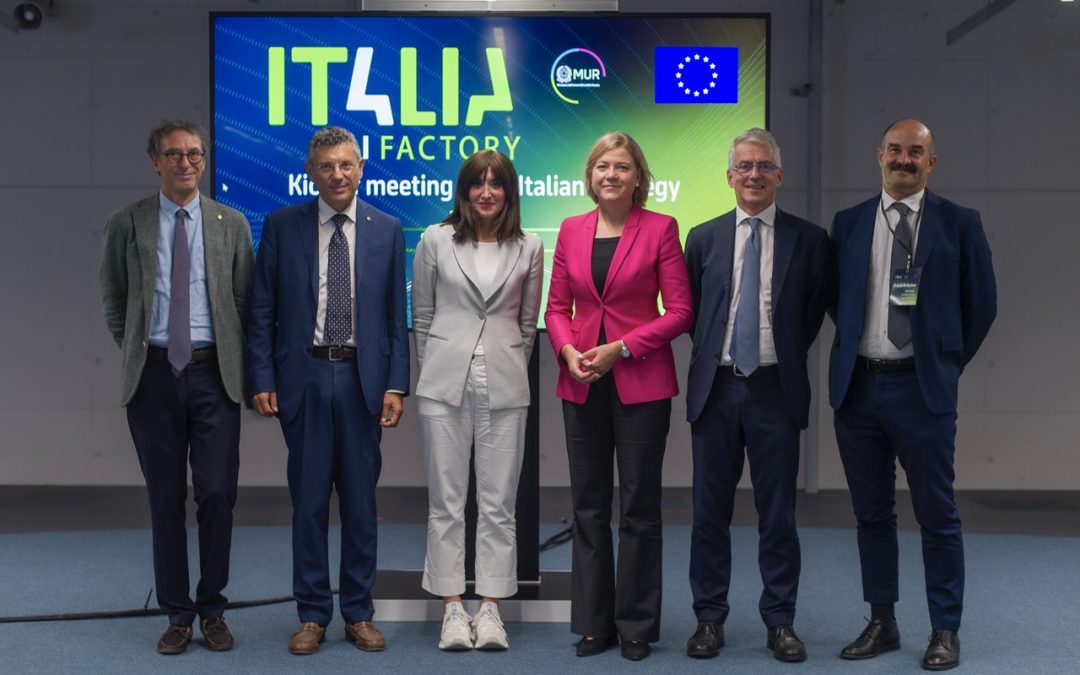
Comment by Antonio Zoccoli
“In addition to demonstrating how our country has been able to implement, if not anticipate, European guidelines on technological and digital development,” comments Antonio Zoccoli, President of the ICSC National Center, “today’s announcement owes much to the experience gained in recent years within the ICSC National Center, which is committed to creating an advanced cloud infrastructure designed to facilitate access to and management of data based on the principles of Open Science. This work has allowed us to develop expertise in this specific sector and contributed to the decision to select ICSC as the Italian EOSC Node. ICSC will make its skills and infrastructure available to enhance computational and big data management capabilities, providing essential support to the Italian and European scientific communities involved in Open Science.”
Thanks to its recognition as an Italian EOSC Node, the ICSC National Center, already an expression of infrastructure and expertise relating to many of the main players in Italian public research, will therefore be able to make its activities even more effective, supporting the national scientific community in the adoption of FAIR practices and promoting collaboration between academic institutions, research bodies, and industrial partners for the management and enhancement of scientific data.
“The decision to apply as the Italian EOSC Node was supported by the Italian Computing and Data Infrastructure (ICDI), which since 2018 has been coordinating the participation of universities, research bodies, and research infrastructures in our country in the EOSC initiative since 2018. This is fully in line with the strategy of the ICSC National Center, which was established just two years ago with the mandate to enable a chain of value extraction from data in Italy to support the growth of the entire country. Today’s result will help achieve this goal by providing additional tools that ICSC can use to position itself as the Italian hub for collecting and coordinating the resources and services that will become part of the European scientific cloud and to consolidate its position as a key player in international science,” concludes Zoccoli.