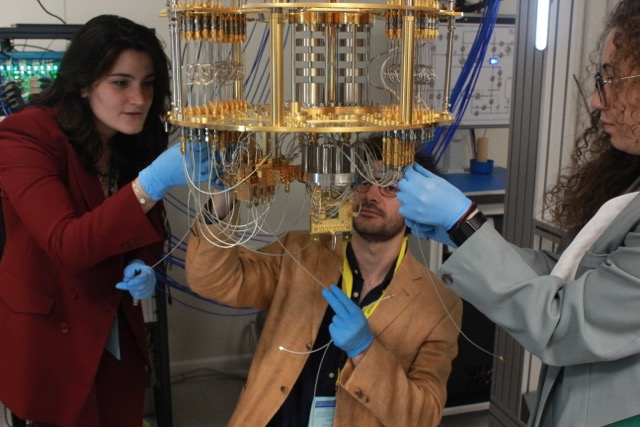
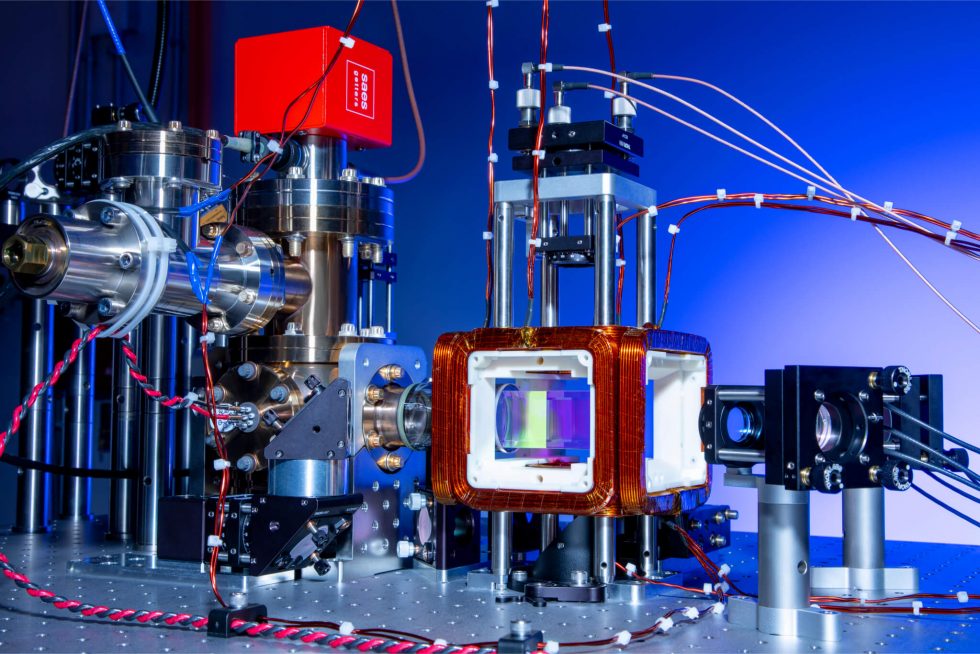
Simultaneously optimising individual logical operations and the configuration of quantum processors to improve algorithm implementation. This is the approach that has enabled the research group at the Superconducting Quantum Computing Centre of the University of Naples Federico II to achieve unprecedented performance in the execution of Quantum Gaussian Sampling (QGS), a type of quantum algorithm used to simulate probability distributions with potential applications in a wide range of cutting-edge fields, such as quantum machine learning, cryptography and quantum finance. Developed as part of a collaboration between Federico II University, Intesa San Paolo and the start-up G2Q, the result was made possible thanks to the use of “Partenope”, the 25-qubit superconducting quantum computer hosted at Federico II and funded by the ICSC – National Research Centre for High Performance Computing, Big Data and Quantum Computing, a platform that aims to promote the development of hardware and software solutions for quantum computing and the creation of an Italian supply chain dedicated to these technologies.
Alongside its consolidated and recognised expertise in superconducting quantum electronics, Federico II’s Superconducting Quantum Computing Centre now boasts a system that is unique in Italy and competitive at an international level. In addition to “Partenope”, this system includes various cryostats and measurement electronics for controlling and reading qubits. An infrastructure entirely designed on the basis of modularity and integrability criteria, capable of guaranteeing, unlike the cloud solutions available on the market, an immediate response to innovation needs through the possibility of control and intervention on every component of the computer, both at the hardware and software level.
Quantum platform
The extreme flexibility, combined with the high reliability achieved by ‘Partenope’ thanks to processor calibration processes based on international standards and the reduction of noise levels achieved through the development of a complex measurement system, therefore determined the choice of the Federico II Superconducting Quantum Computing Centre as the platform for the implementation and optimisation of the QGS algorithm developed by Intesa Sanpaolo and G2Q. The resulting collaboration has thus succeeded in perfecting the implementation of the algorithm from both a hardware and software point of view, paving the way for more effective and efficient execution of this type of calculation.
Comment by Davide Corbelletto
‘The project,’ explains Davide Corbelletto, team leader of Intesa Sanpaolo’s Quantum Competence Centre, “arose from a need at Intesa Sanpaolo, which had already attempted to run algorithms similar to QGS on other types of quantum computers, but encountered certain machine-level constraints that, until now, it had not been possible to address directly. This problem was solved thanks to a deep understanding of the operating mechanisms of the “Partenope” processor and the algorithmic optimisation skills of researchers at Federico II and G2Q Computing, which made it possible not only to generate the expected normal distributions, but above all to control their characteristic parameters. This result is particularly significant for Quantum Finance, which aims to address potentially very complex problems, such as credit risk modelling or derivative pricing, more quickly and accurately, and demonstrates how collaboration between the public and private sectors represents added value for innovation and the development of concrete solutions in the quantum field that can translate into a competitive advantage for players in the country’s economy.
With this latest result, the Superconducting Quantum Computing Centre at the University of Naples Federico II has confirmed its status as a strategic hub for the Italian quantum ecosystem and a successful example of the innovation model pursued and promoted by the ICSC National Centre as part of the PNRR. Thanks to the availability of a resource such as “Partenope”, this innovation model is based on public-private collaboration and the training of specialised professionals capable of contributing to the development of quantum computing and the growth of a national supply chain dedicated to this cutting-edge technology.
The research groups
The Quantum Computing Napoli (QCN) group at Federico II University is a recognised international hub for the study of fundamental transport processes in superconducting systems, such as the Josephson effect, which is at the heart of qubits built using this engineering paradigm. Since 2019, following the first measurements of superconducting qubits in Italy, the group has achieved remarkable results in the characterisation of superconducting quantum devices and the creation of new hardware components, becoming a full member of the European quantum computing network. The working group has up to 20 members involved in various research activities. They work on experiments on the characterisation and implementation of quantum algorithms: PhD students Carlo Cosenza, Alessandro Sarno, Viviana Stasino, and staff members Halima Giovanna Ahmad, Davide Massarotti and Francesco Tafuri.
G2Q Computing is an Italian deep-tech start-up specialising in the development of innovative algorithms that enable NISQ quantum computers to be used for optimisation and machine learning problems. The company also designs architectures capable of parallelising computation between classical and quantum machines, integrating noise reduction techniques.
Coordinated by Davide Corbelletto, the Quantum Competence Centre of the Chief Data, AI and Technology Governance Area of the Intesa Sanpaolo Group has been engaged since 2020 in industrial research into the possible applications of quantum technologies to financial services. In particular, one of the main purposes of the competence centre is to evaluate and explore the potential advantages that quantum computing promises to offer in terms of both problem-solving speed and accuracy of the solutions found.
In the project with Federico II, G2Q Computing and Intesa Sanpaolo contributed to the design of the QGS algorithm, paying particular attention to its robustness and reliability on real hardware. The working group consists of 10 members, and Clément Besoin, Mehdi El Bakraoui, Leonardo Chhabra, Valeria Zaffaroni, Francesca Cibrario and Giacomo Ranieri participated in this activity.


Comment by Tafuri
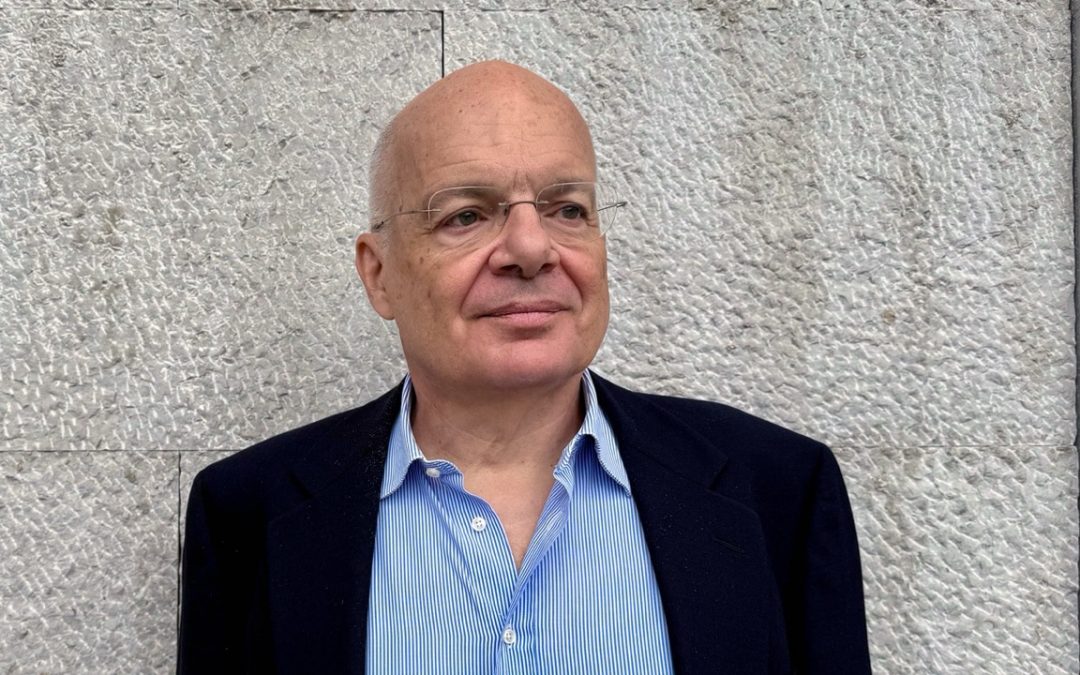
‘The current scenario of quantum computing,’ explains Francesco Tafuri, head of the Superconducting Quantum Computing Centre at Federico II and researcher at Spoke 10 “Quantum Computing” at the ICSC National Centre, “is characterised by computers that are still subject to errors and architectural limitations. Relying on closed systems, known as “black boxes”, can therefore be extremely limiting and penalising, as the inaccessibility of the hardware prevents flexible updates and limits algorithmic performance, which is conditioned by the configuration of the processors. The design philosophy adopted by our group for the creation of “Partenope” provides, on the contrary, the possibility of having control over every modular component of the quantum computer and therefore of exploring, together with companies and researchers, algorithmic solutions that allow us to make the most of the quantum machine made available.”