Abstract
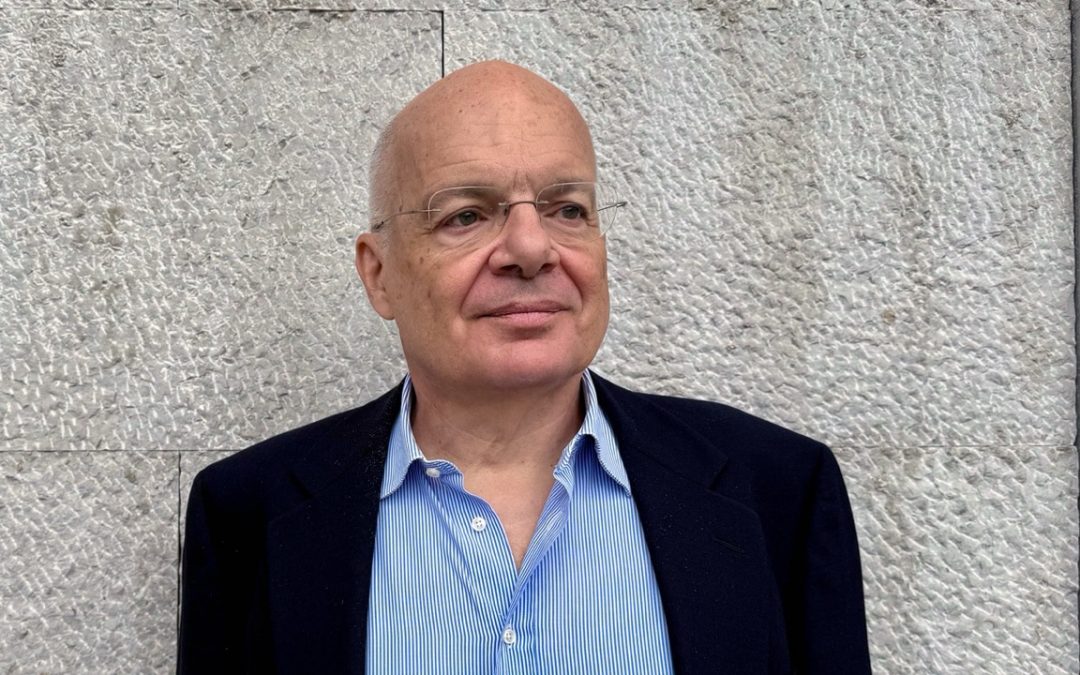
A physicist of Indian origin who became a naturalised American citizen, Aneesur Rahman laid the methodological foundations in the 1950s for what would become “molecular dynamics”, a discipline that uses supercomputing to simulate and study the properties of matter at the atomic level. Since 1993, the main international award in the field of computational physics, presented annually by the American Physical Society, has been named after him. The winner of the 2026 edition of this prestigious award is Stefano Baroni, professor at the International School for Advanced Studies (SISSA) in Trieste, for his fundamental achievements in the study of the electronic, vibrational and thermal properties of condensed matter and in the development and dissemination of widely used open-source software for electronic structure calculations. This recognition is further proof of the high level of expertise and research activity currently taking place within Spoke 7 “Materials and Molecular Sciences” of the ICSC – National Research Centre in HPC, Big Data and Quantum Computing, of which Stefano Baroni is co-leader.
Career
Professor of Theoretical Condensed Matter Physics at SISSA since 1988, Stefano Baroni’s career has been marked by the creation of new simulation paradigms, the development of tools that have become part of the shared heritage of the entire physics community, and coordination and leadership roles in important research institutions. Director of the Centre Européen de Calcul Atomique et Moléculaire (CECAM) – then part of the École Normale Supérieure de Lyon – from 1994 to 1998, in 2002 he founded the DEMOCRITOS National Centre for Numerical Simulation at SISSA, now part of the CNR’s Materials Workshop Institute. Finally, in 2022, he was appointed co-leader of Spoke 7 of the ICSC National Centre, where Stefano Baroni’s experience and expertise have made a decisive contribution to building a bridge between research and business, promoting the transfer and exploitation of solutions developed in the field of numerical techniques for studying the properties of materials and molecules within production processes. This context also includes his involvement with the SISSA Materys start-up, dedicated to providing high-performance computing services, of which Baroni is a founding partner.
Baroni recounts
‘Like many awards that come later in life, this one is also — if not above all — a tribute to my colleagues and students who made my work possible,’ says Baroni. “The motivation for the award refers to three milestones in my career, which relate to three different periods: the development in the late 1980s of a method that has since become widely used to calculate the dynamic and dielectric properties of solids; the development over the last decade of a new theory of thermal conduction in condensed matter; and, throughout this time, the creation and promotion of the Quantum ESPRESSO software, now considered a standard in quantum materials simulation. Thanks to the ICSC National Centre, I am delighted that these results can now also make a significant contribution to the competitiveness and sustainable growth of the country, both in academia and industry. I therefore consider the work carried out so far in Spoke 7 to be of great importance, and I am certain that it will continue in the near future for the benefit of both the research system, enabling it to train and retain new skills, and the manufacturing system, allowing it to benefit from the extraordinary expertise that the Italian computational materials science community has been able to accumulate.”
The value of research
As already highlighted in the reasons for his election as a Fellow of the APS in 2006, Baroni has been able to bridge the gap between theoretical innovation and practical implementation in a unique way, creating powerful formalisms and transforming them into tools that can be used by researchers. The awarding of the Rahman Prize reaffirms the value of research that combines theoretical elegance, algorithmic application and the creation and open sharing of high-quality software. A pioneer of an open science approach to research, Stefano Baroni has led a community capable of providing cutting-edge code, ready to exploit the most modern computing architectures, making Italy one of the recognised international leaders in the field of computational materials science. Baroni continues to play this role within the ICSC National Centre.
Comment by Stefano Fabris
“I am deeply happy about this recognition, which rewards the vision and commitment of Stefano Baroni, whose work has enabled thousands of researchers around the world to simulate materials and molecules from first principles, develop new theories and test new methods. His contribution and the Quantum ESPRESSO community, which he promoted and tenaciously supported, testify to the strength of the Italian school of computational materials science. A school that, thanks also to the synergies created between SISSA and CNR and materialised in the leadership of Spoke 7 of the National Centre for HPC, Big Data and Quantum Computing, has become an international benchmark,” comments Stefano Fabris, Director of the Department of Physical Sciences of the National Research Council and leader of Spoke 7 of ICSC.