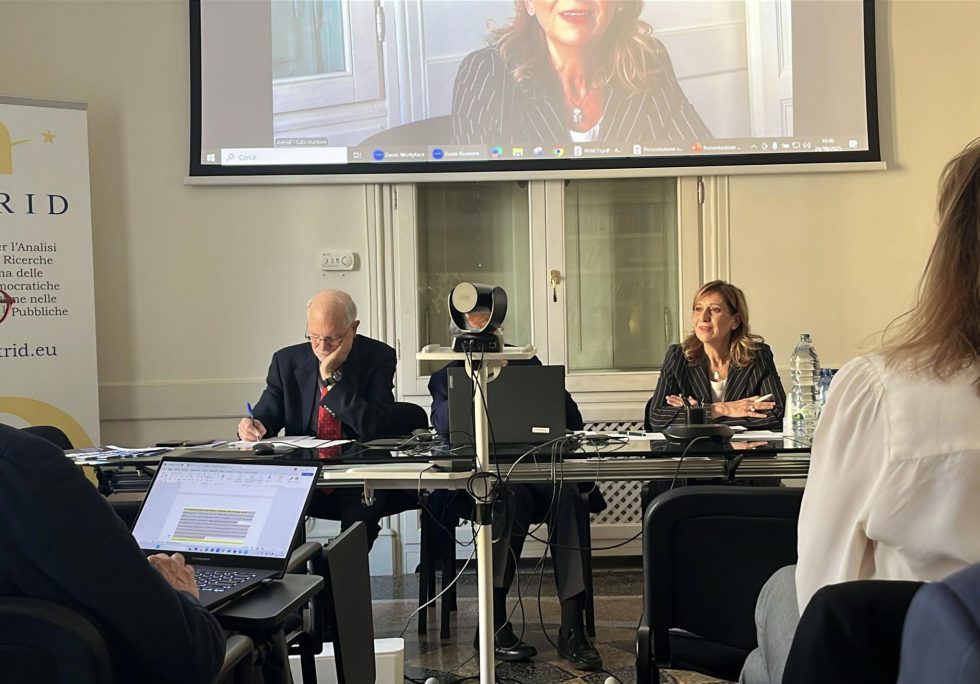
Milan, March 5 – Today the fifth event of the ICSC Observatory took place at the Politecnico di Milano. The initiative is promoted by ICSC – National Center for Research in Supercomputing, Big Data, and Quantum Computing and organized by IFAB – International Foundation Big Data and Artificial Intelligence for Human Development. The need for supercomputers and quantum computing in a world that has already generated over 200 zettabytes of data is crucial to tackling complex challenges, from pharmaceutical research to artificial intelligence, from climate modeling to cybersecurity.
The themes
Supercomputing, or High-Performance Computing (HPC), and quantum computing are transforming the way we tackle scientific, industrial, and social challenges. Today, in the Rogers Hall of the Politecnico di Milano, the fifth event of the ICSC Observatory highlighted these technologies, providing insight into their most advanced applications and future prospects.
Promoted by ICSC – National Center for Research in Supercomputing, Big Data, and Quantum Computing and organized by IFAB – International Foundation Big Data and Artificial Intelligence for Human Development, the event brought together some of the leading experts in the field, academics, and industry representatives to explore the impact and potential of the new frontiers in high-performance computing.
Supercomputers and Quantum Computing: the new era of computing
With the world having already generated over 200 zettabytes of data, the demand for computing power is growing exponentially. In this scenario, supercomputers and quantum computing prove essential for tackling complex challenges, from pharmaceutical research to artificial intelligence, from climate modeling to cybersecurity.
Italy, thanks to the National Center ICSC, is establishing itself as a key player in the development of these technologies. Collaboration with the European Union and the international research network allows our country to actively contribute to the creation of advanced computing infrastructures and the development of innovative solutions for the academic, industrial, and public sectors. The goal is to transform supercomputing and quantum computing into accessible and strategic tools for economic and scientific growth. The IFAB Foundation plays a key role in spreading these technologies among SMEs, the driving force of the Italian economy.
Sergio Zazzera, Technical Computing for Geosciences & Subsurface Operations and High Performance Computing Center of Excellence at Eni, illustrated the role of HPC6, the company’s supercomputer active since November 2024, with a peak performance of 606 PFlops (over 600 million billion operations per second), placing it among the top five supercomputers in the world according to the TOP500 ranking. “This computing infrastructure not only increases operational efficiency but also significantly reduces environmental impact,” emphasized Zazzera.
Quantum Computing: the sectors at the forefront
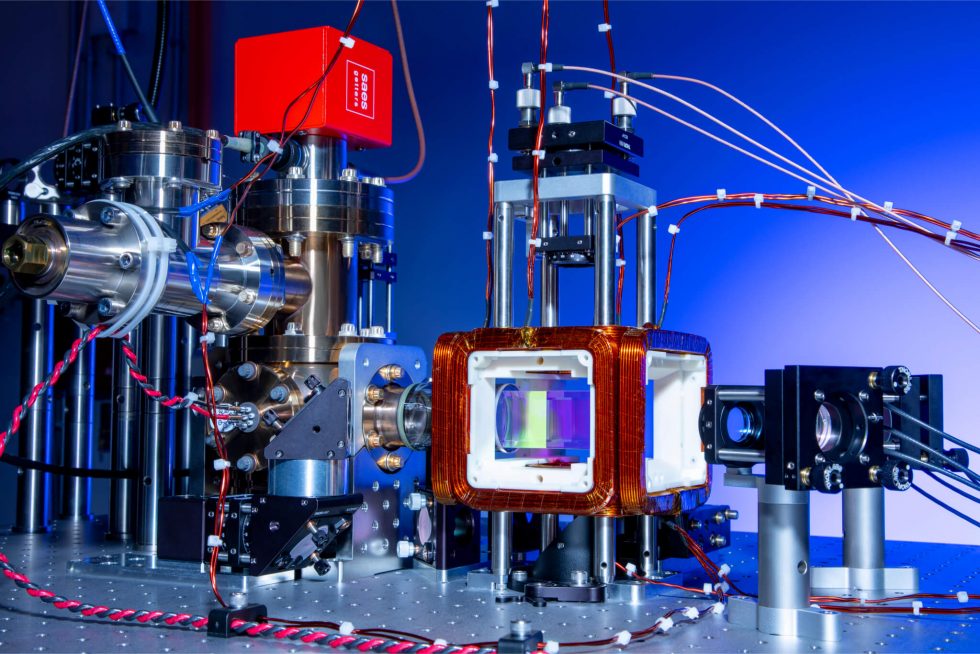
Although quantum computers are still limited in size and, for now, cannot solve problems at an industrial scale, joint efforts between public and industrial research are accelerating their development and may open new opportunities in strategic sectors in the coming years. According to a census of public Quantum Computing project announcements conducted by the Politecnico di Milano Observatory, the most active sectors in quantum computing are: Banking and Insurance (27% of projects); Chemical and Pharmaceutical (21%); Automotive (12%); Energy, Utilities, and Telecommunications (12%); Aerospace and Defense (9%); Manufacturing, Logistics and Retail (8%); IT (6%); other sectors (5%).
These numbers demonstrate that quantum computing is no longer an experimental technology, but a strategic asset for companies aiming for innovation.
From Research to Society: the real applications of Supercomputing
A particular focus was given to the projects of Spoke 9 – Digital Society & Smart Cities and Spoke 10 – Quantum Computing, two key communities within the ICSC ecosystem. Spoke 9 is working to make cities smarter and more efficient, improving public services and infrastructure through the use of HPC. Spoke 10, on the other hand, explores the applications of quantum computing in strategic areas such as advanced simulation and cybersecurity.
“Advanced computing technologies are no longer just research tools: they have a direct impact on our daily lives, from smart cities to personalized medicine,” said Alberto Ottavio Leporati, associate professor at Università di Milano-Bicocca and researcher at ICSC’s Spoke 9.
Enrico Prati, associate professor at Università Statale di Milano, highlighted how quantum computing is revolutionizing sectors such as materials simulation, supply chain optimization, and quantum cybersecurity. “This technology will allow us to tackle problems impossible for classical computers,” he explained.
AI Accelerators and Multiscale Modelling: the new frontiers of computing
During the event, Cristina Silvano, full professor at the Politecnico di Milano, presented the potential of Artificial Intelligence accelerators within the context of Spoke 1 – Future HPC and Big Data, highlighting how the integration between HPC systems and on-the-edge devices can significantly improve the efficiency of AI applications.
Following this, Paola Francesca Antonietti, full professor at the Politecnico di Milano, introduced the activities of Spoke 6 – Multiscale Modelling & Engineering Applications, which focuses on using HPC for advanced modeling in engineering and materials science. Her presentation emphasized how supercomputing is increasingly essential for tackling complex simulation problems, with applications ranging from aerospace to the design of new high-performance materials.
The integration of these technologies is essential to make HPC increasingly accessible and functional for research and development needs across multiple domains.
Towards an era of democratised supercomputing
The event provided a platform for discussion among institutions, companies, and the academic world on how to make these technologies accessible and functional for the concrete needs of society. Thanks to initiatives like ICSC and the support of partners of the National Center such as IFAB, Italy is positioning itself as a strategic hub for innovation in supercomputing and quantum computing.
Today’s discussion confirmed that HPC and quantum computing are no longer futuristic scenarios, but tools already capable of changing the present. The challenge now is to accelerate their adoption, in order to translate computing power into tangible progress for everyone.